Encode Club · Vibe Coding Hackathon
Trace Labs
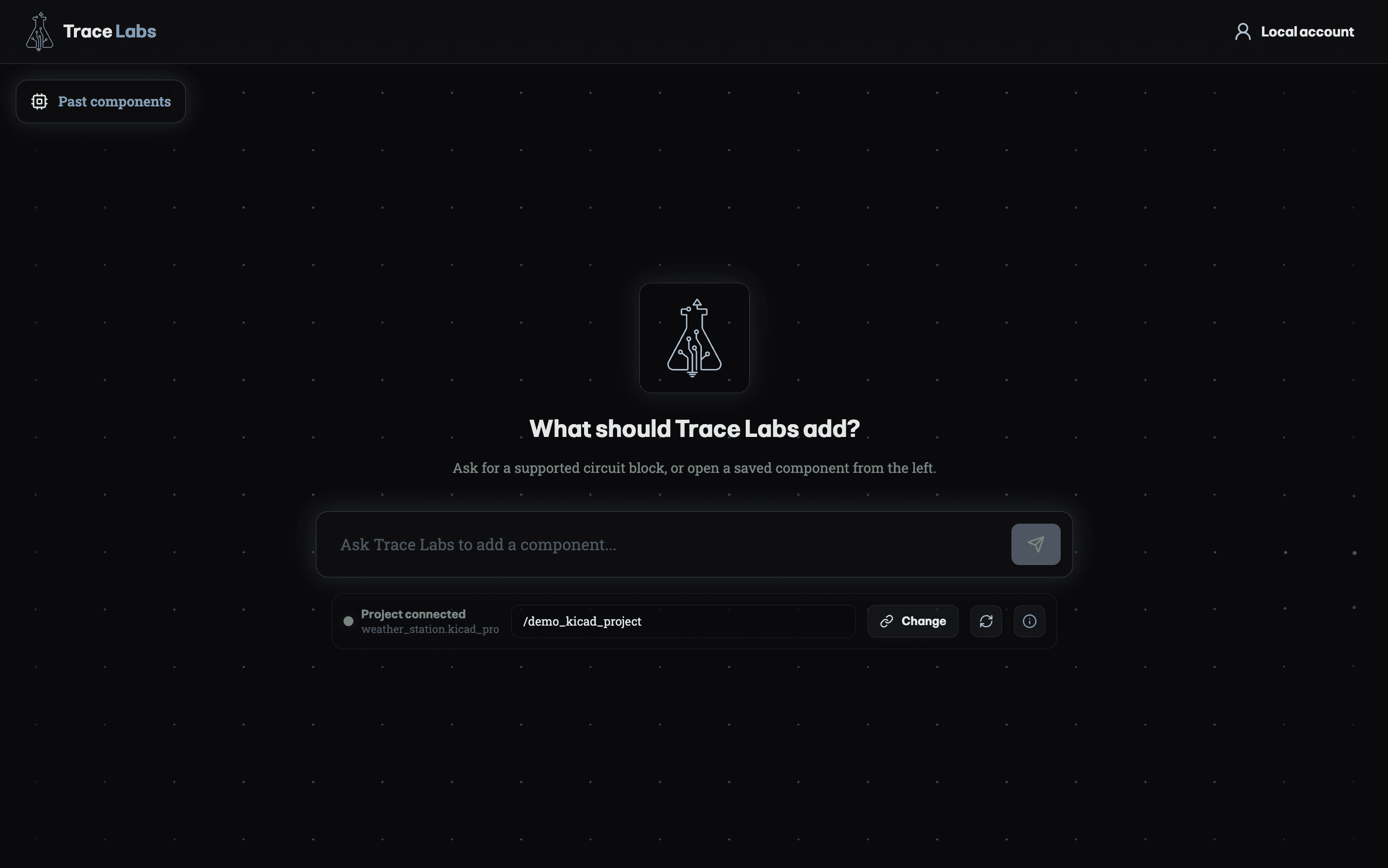
I built an Electron and React desktop tool to explore how OpenAI APIs and agents could support a real KiCad workflow.
What the project taught me
Building the agent was only one part of building the product.
The hackathon pushed me across desktop architecture, React state, agent orchestration and interaction design. The most useful learning was making those layers behave as one understandable system.
Electron
Building beyond the browser
I learned how to structure a desktop application around a real local workflow, connecting the interface to the KiCad project it was helping with.
- Local project context
- Desktop app architecture
React
Turning complexity into state
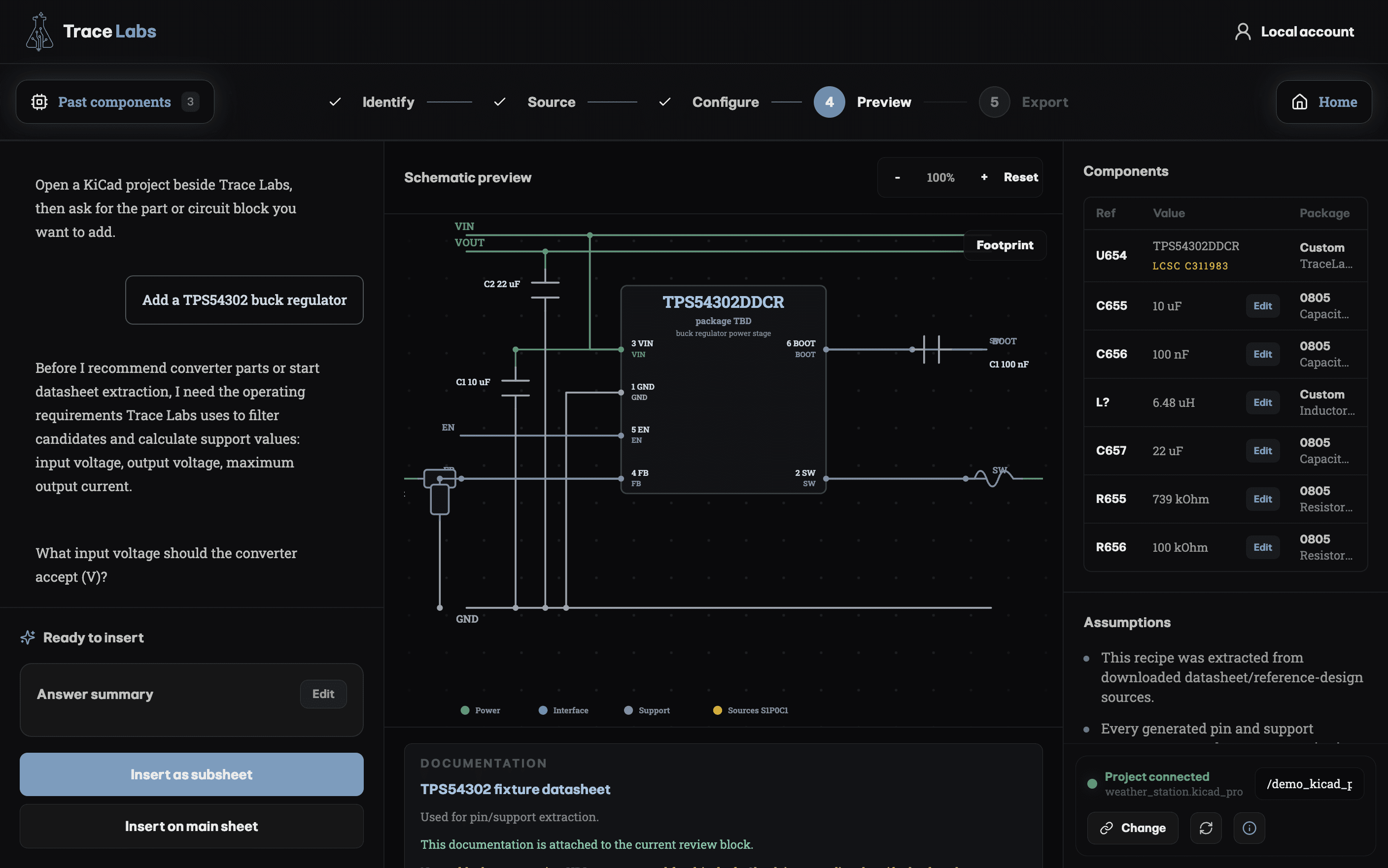
I used React to keep a conversation, a generated circuit and editable component data aligned across one multi-step experience.
- Multi-step UI
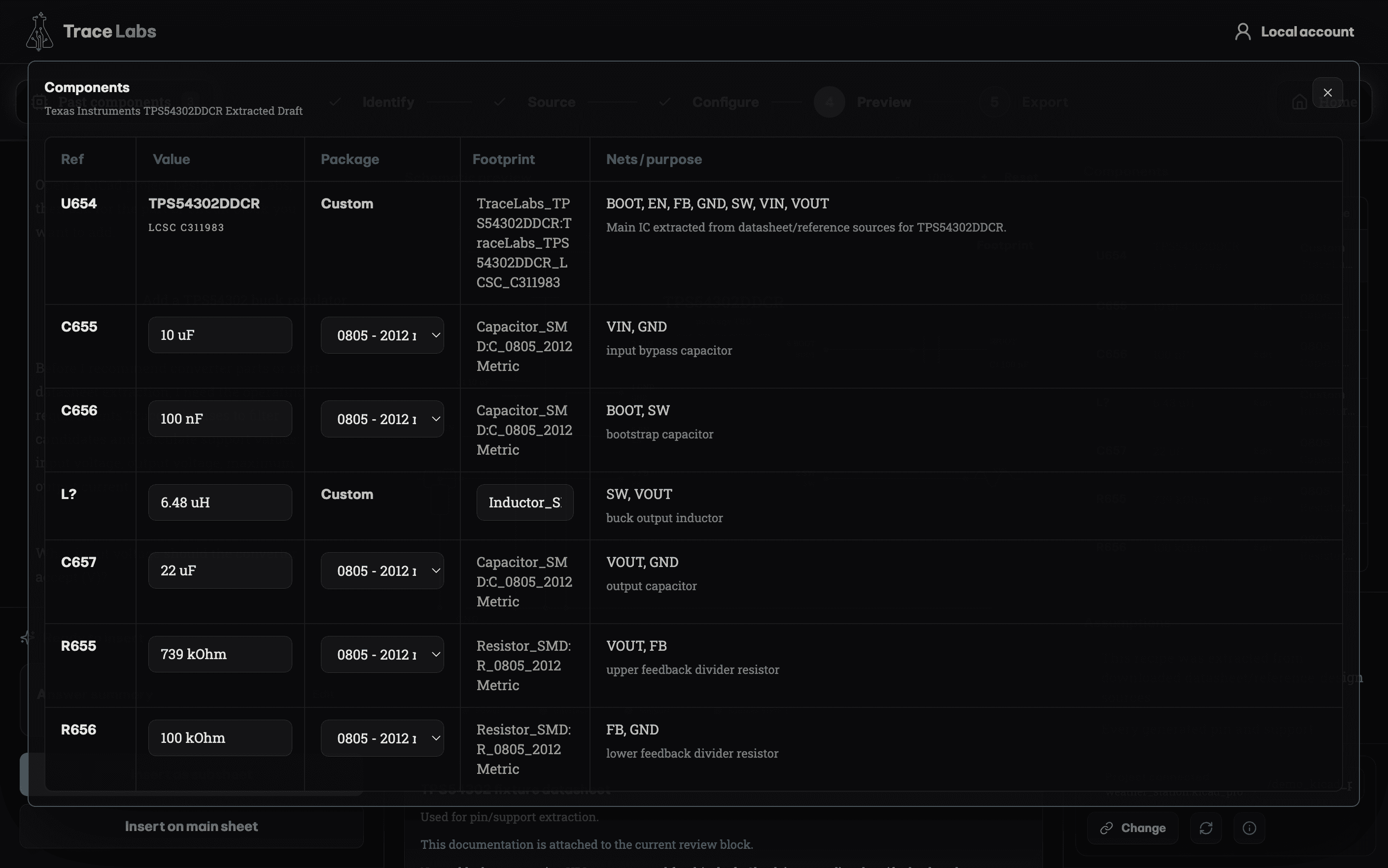
- Editable preview state
OpenAI APIs + agents
Making model output usable
I broke an open-ended engineering request into agent-style steps and structured outputs that the application could inspect, display and act on.
- Agent orchestration
- Structured outputs
AI product design
Designing for human control
The project taught me to expose assumptions, progress and approval points so AI behaves like part of a dependable tool rather than a black box.
- Human review
- Visible assumptions
My main takeaway
AI needs structure before it feels trustworthy.
I came away more confident building agentic software and more aware of where it needs boundaries. Clear state, inspectable outputs and human approval mattered just as much as the model itself.
- 01 Turn model responses into application state
- 02 Make assumptions visible and editable
- 03 Scope around one complete working journey