Imperial College London / HCDE module
FridgeSpace
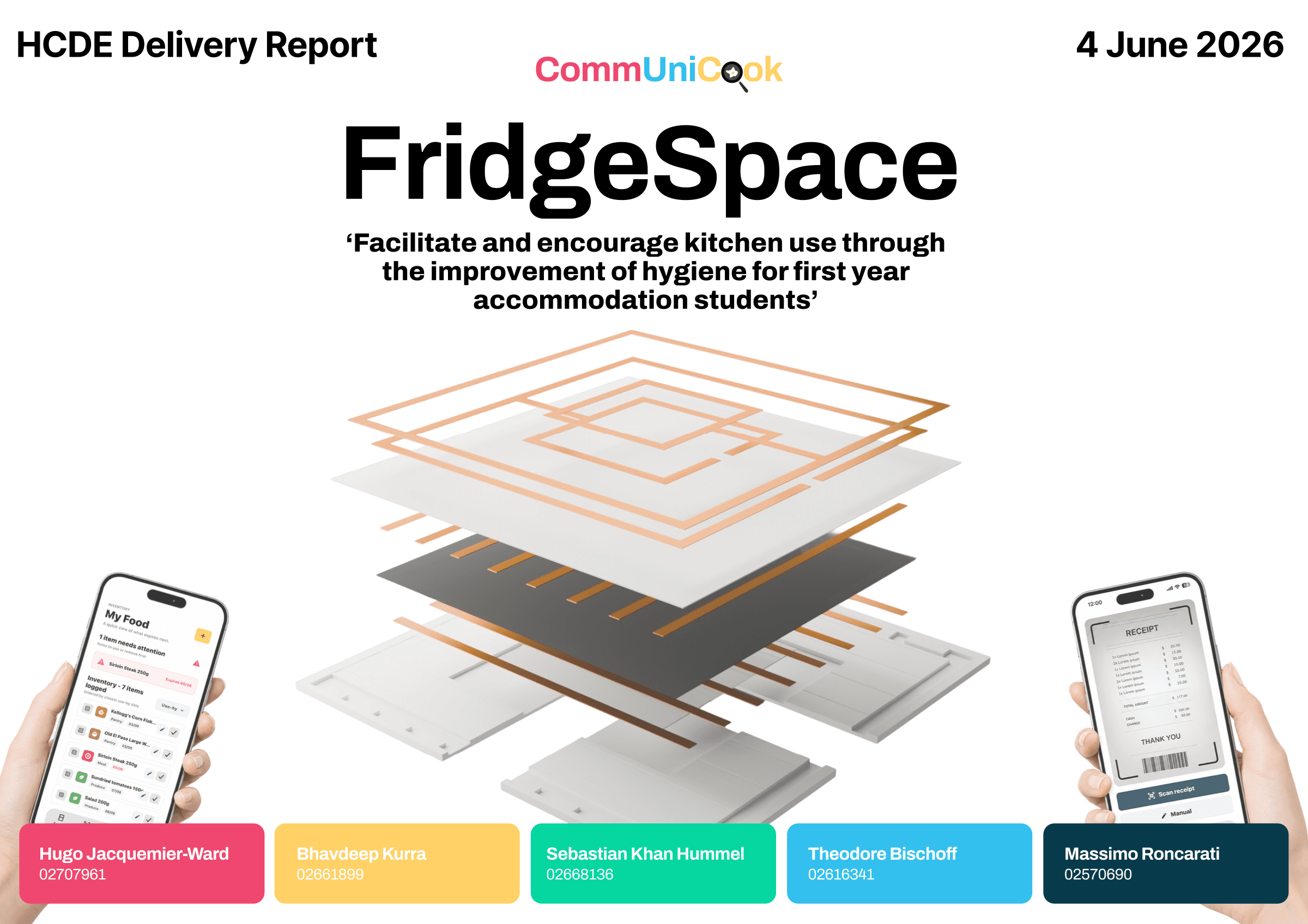
A human-centered design engineering project where I turned research into a polished A+ submission, a React Native app, and a connected physical fridge-space prototype.
- Graphic design
- React Native
- Bluetooth + ESP32
- Google Cloud APIs
- User research
Final submission grade
My contribution
Design engineering across research, interface, hardware, and story.
Report and slide design
Owned the look, layout, hierarchy, and visual communication of the submission deck, turning dense research and system details into scannable evidence.
React Native build
Built a large part of the mobile app experience, from fridge-space views and scan flows to item lists, settings, notifications, and iterative interface refinements.
Bluetooth integration
Worked on Bluetooth connectivity between the app, ESP32, and physical pressure mats so empty fridge space could be detected and surfaced in the interface.
Google Cloud APIs
Connected receipt images to Google Cloud Vision OCR, then helped turn raw receipt text into structured food items and estimated expiry dates.
OpenAI processing
Used LLM processing to clean OCR output, discard irrelevant receipt information, extract item names, and return app-ready inventory data.
User research
Contributed to surveys, interviews, observation, affinity mapping, personas, HMW framing, and user feedback loops that kept the concept grounded.
Human-centered process
The product direction came from what students actually struggled with.
The early research pointed away from a purely technical kitchen gadget and toward communication, effort, visibility, and shared accountability. I helped synthesize that evidence into a sharper direction for FridgeSpace.
Find the kitchen problem
Survey work gathered 52 responses and showed that kitchens were a validated pain point, with packed fridges, blocked sinks, and poor communication appearing repeatedly.
Turn data into decisions
Interview notes, survey data, observation, and secondary research were grouped through affinity mapping to form core issues and How Might We questions.
Prototype against people
The app moved from Figma wireframes into React Native builds, then changed after feedback from representative users and new users seeing the flow cold.
Integrate the system
The final direction linked a physical fridge shelf mat with a mobile inventory app, receipt scanning, notifications, and group accountability.
Data analysis
01 / 03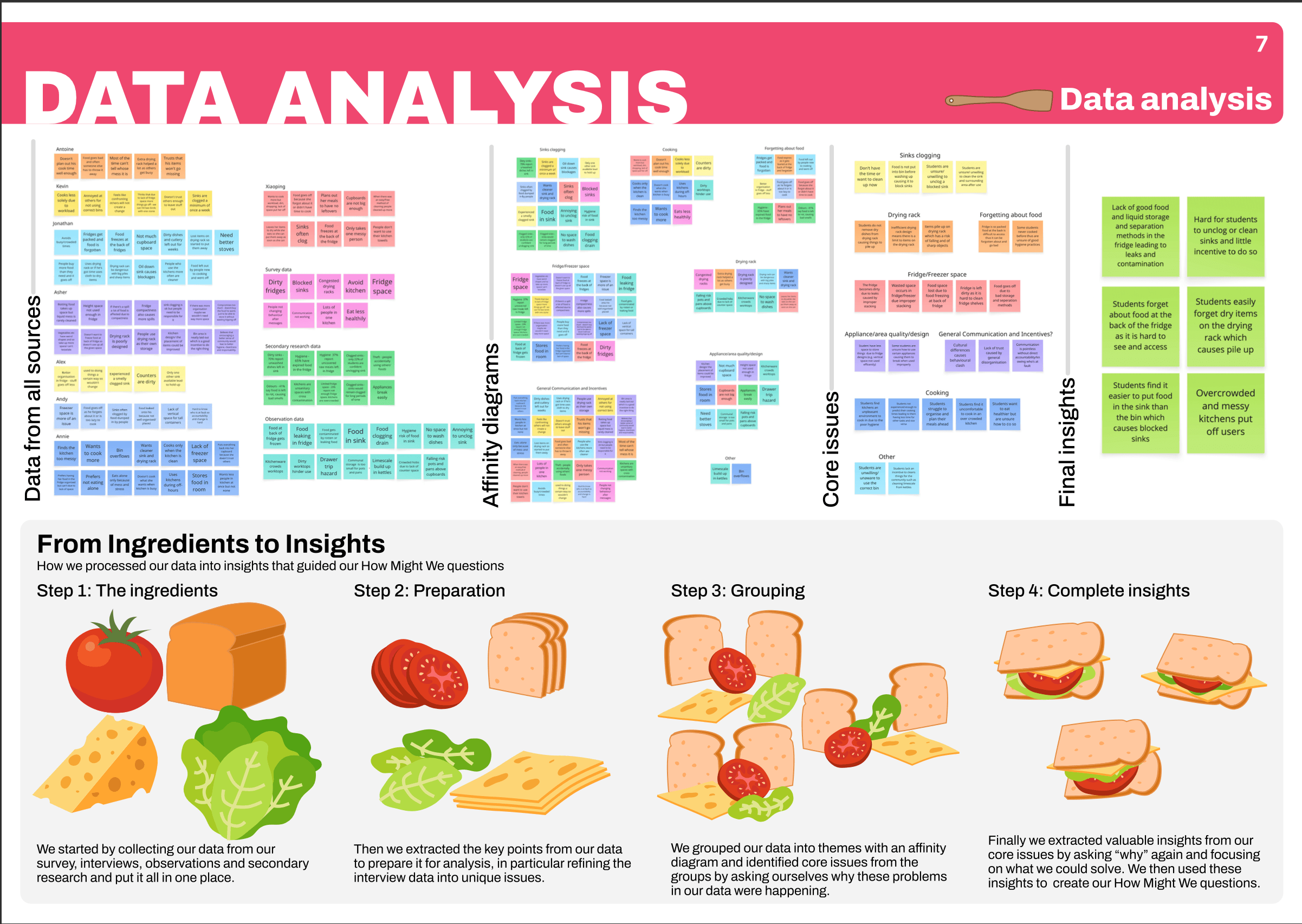
Physical plus digital
A pressure mat, a phone app, and a cloud pipeline.
FridgeSpace was not just an app mockup. It connected a physical sensing layer to a mobile interface and cloud services, with the technical pieces explained clearly in the final report.
Pressure mat
A layered Velostat and copper pressure mat detects which fridge zones are empty, giving users a spatial view of available shelf space.
mat state -> empty spaceESP32 + Bluetooth
The app connects to the mat setup over Bluetooth so the physical shelf can update the digital fridge view without manual entry.
ESP32 -> mobile appReceipt OCR
Users scan receipts; Google Cloud Vision extracts raw text and returns structured data for the next processing stage.
image -> OCR textInventory data
OpenAI processing extracts item names, filters noise, estimates expiry dates, and feeds the React Native inventory screens.
text -> items + datesApp architecture
01 / 03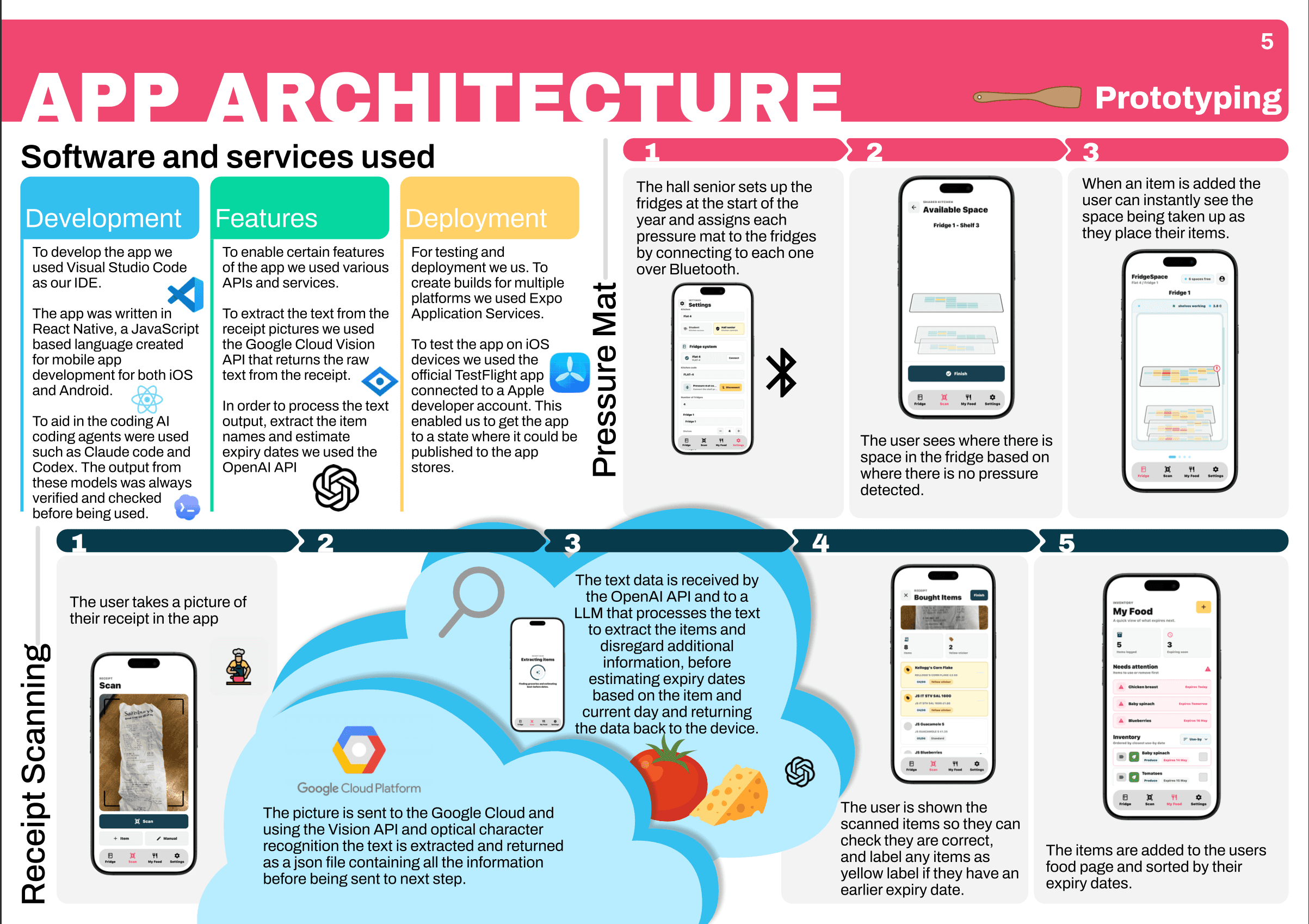
Designed communication
Dense work made legible through a consistent visual system.
Survey results
01 / 03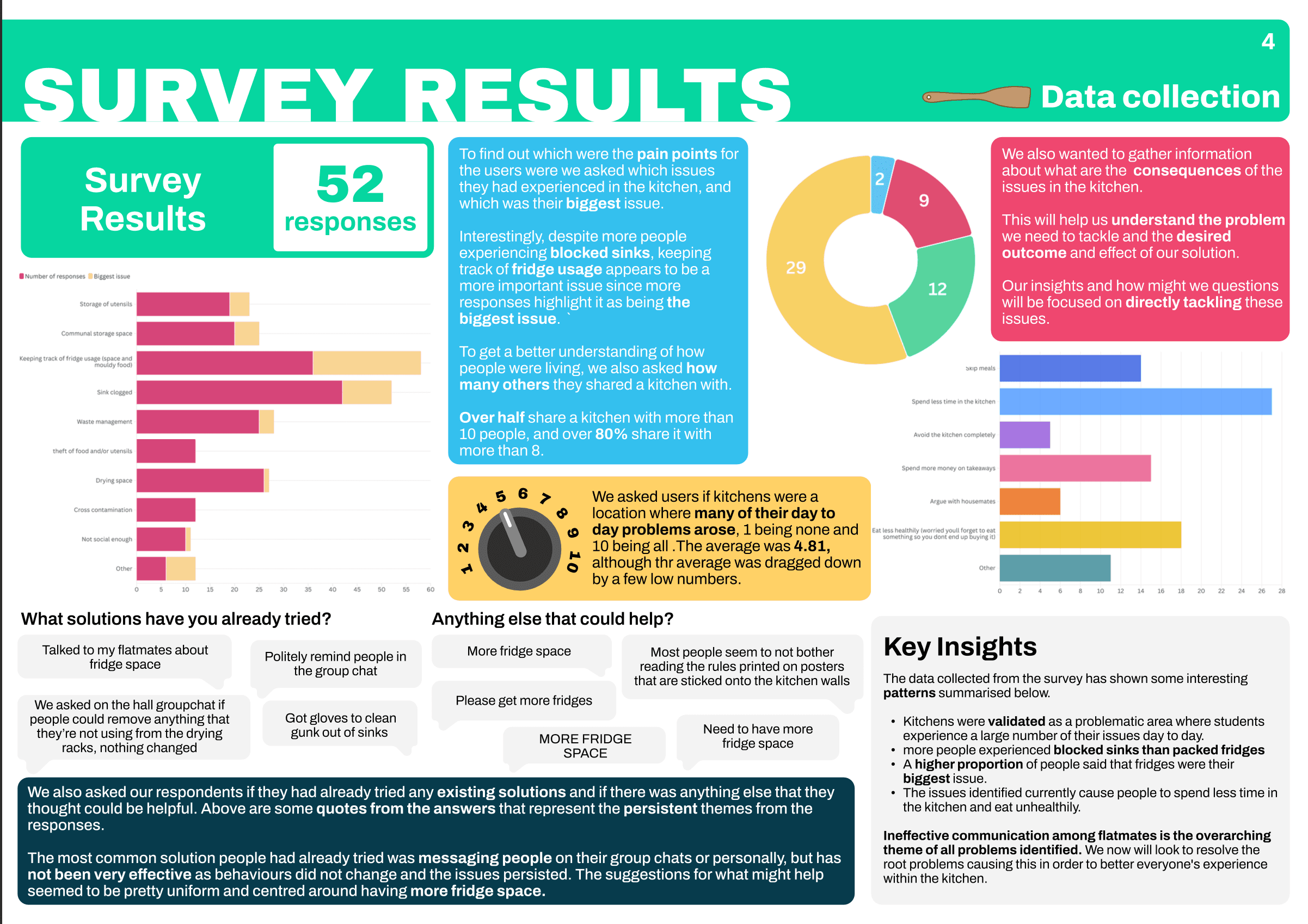
Result
A+ submission, with the design story and technical stack aligned.
FridgeSpace gave me a clean case study in the type of design engineering I enjoy most: finding the right problem through user evidence, making the interface real, connecting it to hardware, and communicating the full system with enough clarity to be assessed at a high level.
Read the full reports to dig into the research, prototype decisions, technical system, and final submission in detail.